1 Lomé, Togo
Originally compiled in Lomé, Togo.
Computer science degree. Years of building software for people with few resources and unreliable networks.
Dry land. For now.
2 A Boskalis dredging & construction site
Surveyors sent me XYZ point clouds, CAD drawings, triangle sets, DTMs and logs, each in its own precise format.
Processing them took up to a week. Results arrived late.
The visualizations teams needed were never made.
Up to a week → under 15 minutes.
The core module became a toolbox: I reused it to automate other tasks, like scripts that pull precise points out of CAD files.
Teams could finally watch their groynes take shape during construction, not after it was finished.
3 The surveyors' hut
Before writing a line of code, I went to see how the surveyors worked.
They walked me through every dataset, their coordinate systems, the layers of the final structures.
I learned where my output fit in their day, and why one dataset had to be processed before a given step.
The code was the easy part.
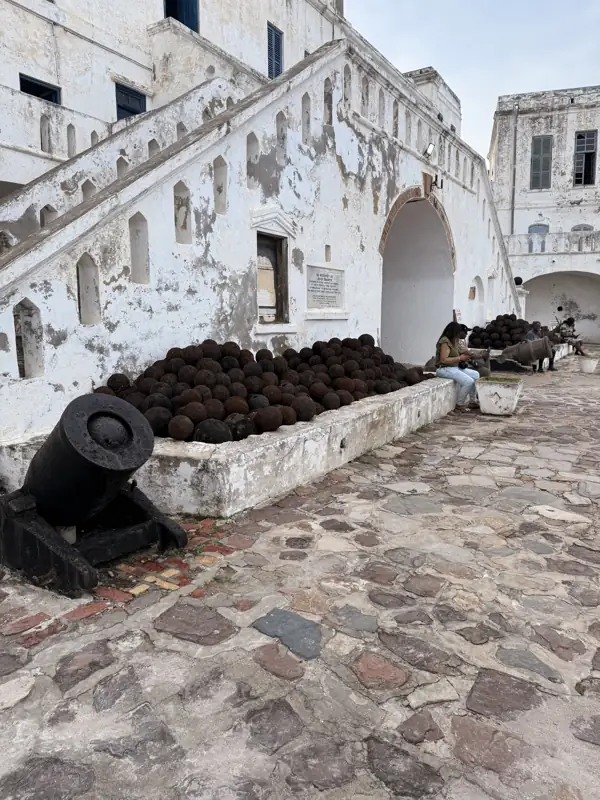
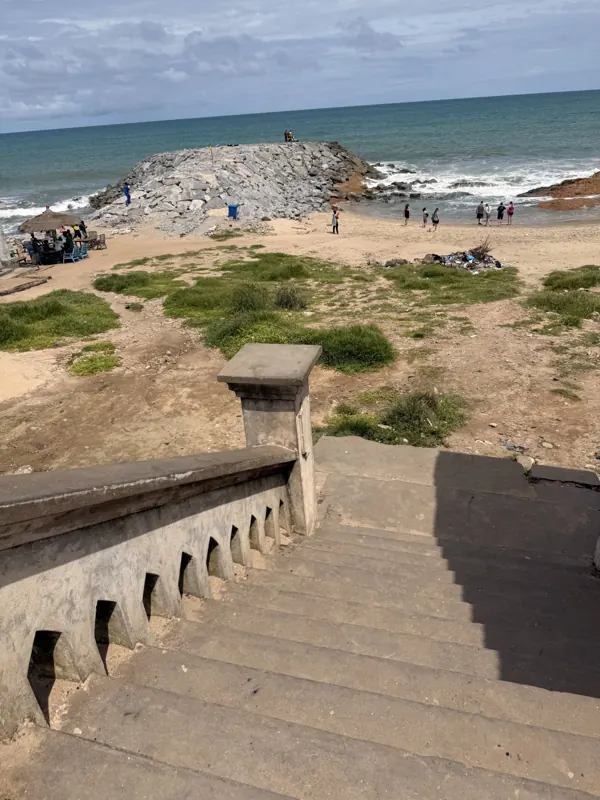
4 Cape Coast, Ghana
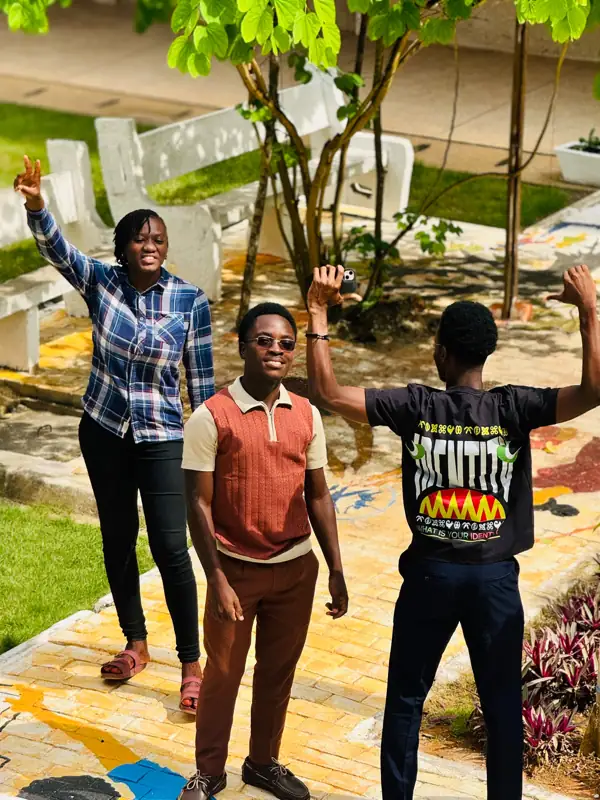
16 weeks of English in Cape Coast with my WASCAL batch: 32 students, 8 countries.
On my own initiative, I built a site to keep our story.
5 Mindelo, Cabo Verde
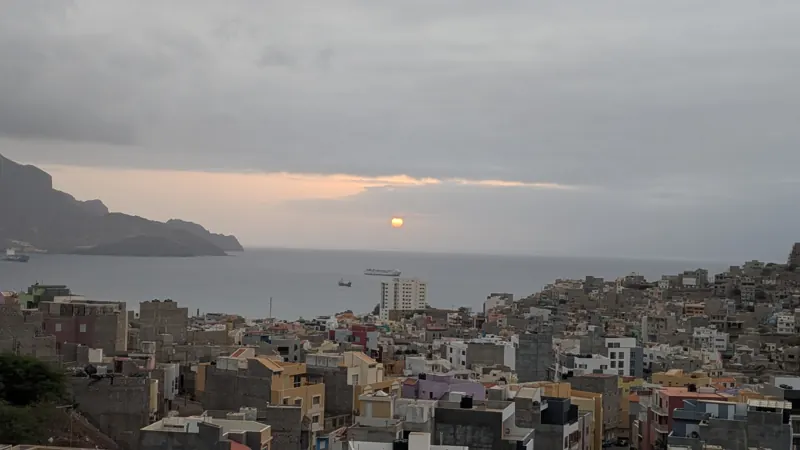
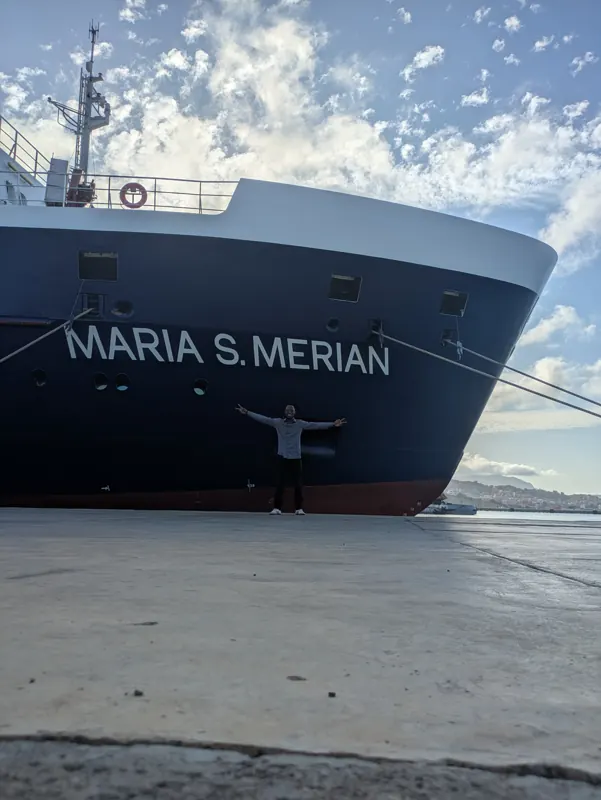
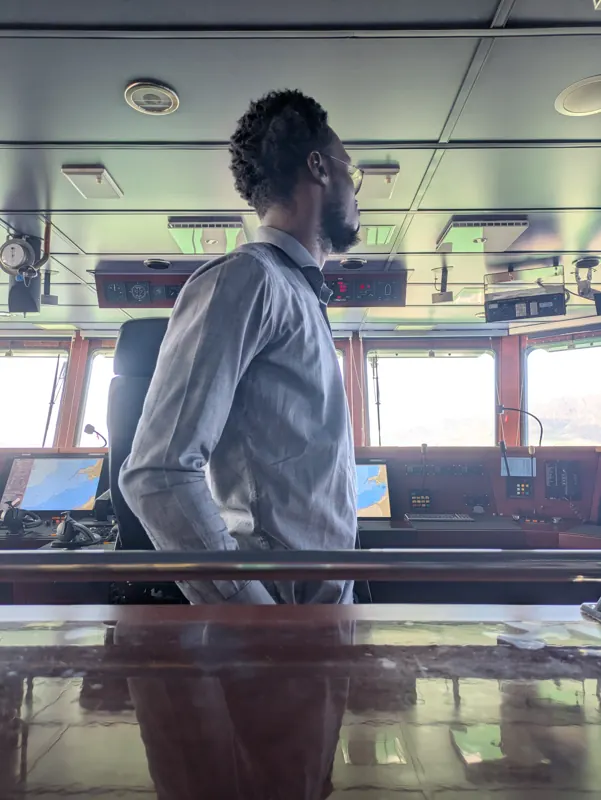
Now: Master's in Marine Sciences and Climate Change, Mindelo.
I work with classmates from across West Africa on the Saloum estuary. My part: its physical and chemical characteristics.
I'm building our presentation, including a 3D animation of how an estuary forms.
I'm the only software engineer in the room. I learn the ocean from them; they get visuals from me.
Wind: strong.
Kriolu: still loading...
6 Here be
lost data
- Hard drive: data that exists, but nobody can find.
- Padlock: data nobody is allowed to use.
- final_v3_REAL.xyz: data nobody can read.
At Boskalis, the data I processed served one team and one project, then stayed inside the company.
Studying estuaries, I hit the opposite problem: the data I need exists somewhere, but I can't find it or use it.
This fog is why Big Datasets, Bigger Challenges is my first choice.
7 Madeira, 15-17 March 2027
What I'd bring: pipelines, metadata discipline, and tools built for people who aren't programmers. The same skills work for carbon sensor data or MPA monitoring networks.
Challenges, by enthusiasm
- Big Datasets ★★★★★
- Counting Carbon ★★★★
- Protecting Our Protections ★★★★
- Magnifying the Microscopic ★★
This spot on the map is still empty. I'd like to fill it.